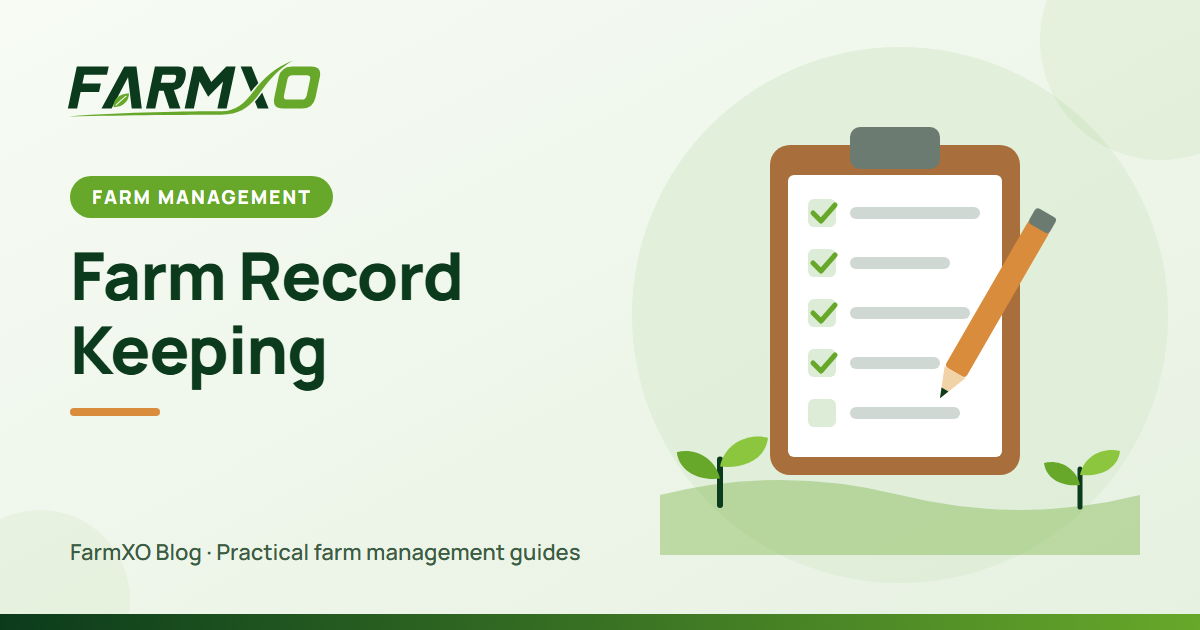
Good farm record keeping is the difference between guessing and knowing. Records tell you which fields perform best, where money leaks out, and what worked last season so you can repeat it. They also make loans, subsidies, insurance claims and certifications far easier.
Below are the nine farm records every operation should keep, what each one should contain, and tips for keeping them up to date.
1. Field and land records
Create one record per field or plot: name, area, location, soil type, ownership or lease terms, irrigation source and any soil test results. This is the foundation that every other record links back to.
2. Cropping history
For each field and season, record the crop and variety, sowing date, seed rate, harvest date and yield. Over a few years this becomes the basis for crop rotation planning and realistic yield targets.
3. Field activity log
Every operation performed on a field: ploughing, sowing, irrigation, fertilizer application, spraying, weeding and harvesting. Note the date, who did it, the machinery used and the inputs applied.
4. Fertilizer and chemical application records
These deserve their own detail because they matter for both cost and compliance. Record the product name, active ingredient, dose per acre or hectare, total quantity, weather conditions, target pest or deficiency and the pre-harvest interval. Buyers and certifiers frequently ask for these spray logs.
5. Inventory records
Track what comes into the store and what goes out: seed, fertilizer, pesticides, fuel, feed and spare parts. Include batch numbers and expiry dates for chemicals. Accurate farm inventory management prevents both stock-outs at critical moments and over-buying.
6. Labor and attendance records
Who worked, on which days, for how many hours, and on which task or field. This lets you calculate labor cost per crop and pay workers accurately. See our guide to farm labor management.
7. Machinery records
Hours or kilometres run, fuel used, services performed, repairs and their cost. Machinery records help you plan maintenance and decide when replacing a machine is cheaper than repairing it.
8. Financial records
All income and expenses, ideally tagged to the crop or field they relate to: input purchases, labor, fuel, rent, interest, sales and subsidies received. Keep receipts and invoices linked to the entry.
9. Sales and harvest records
Buyer, date, quantity, grade, price and payment status for every sale. Tie each sale to the crop and field that produced it so revenue can be compared against cost.
Tips for keeping farm records accurate
- Record on the same day. Memory fades fast; a two-minute entry in the evening beats a guess a week later.
- Use the same names everywhere. "Field 3", "North plot" and "Ramesh's field" should not all mean the same place.
- Let the people doing the work record it. Field staff entering activities on their phone is more accurate than the manager reconstructing them.
- Review weekly. A short weekly check catches missing entries before they become gaps.
- Back up. Paper gets wet, lost or eaten. Digital records stored in the cloud do not.
Paper farm record book vs digital records
A paper farm record book costs nothing and works without power, but it cannot add up costs, remind you of tasks or show trends. Spreadsheets add calculation but quickly become fragmented across files and people. A farm management system connects all nine records automatically – an activity logged on a field deducts inventory, adds labor cost and updates the crop's profit in one step.
If your records are already slipping, read five signs your farm records need a digital upgrade, or start a free AgriFarm account and add your first field today.
Frequently asked questions
How long should I keep farm records?
Keep financial and tax records for at least as long as your local tax authority requires (often several years), and keep field and cropping history permanently – it only gets more valuable with time.
What is the most important farm record?
If you start with only one, start with the field activity log including inputs used. Most other insights – cost per crop, yield trends, compliance – can be built from it.